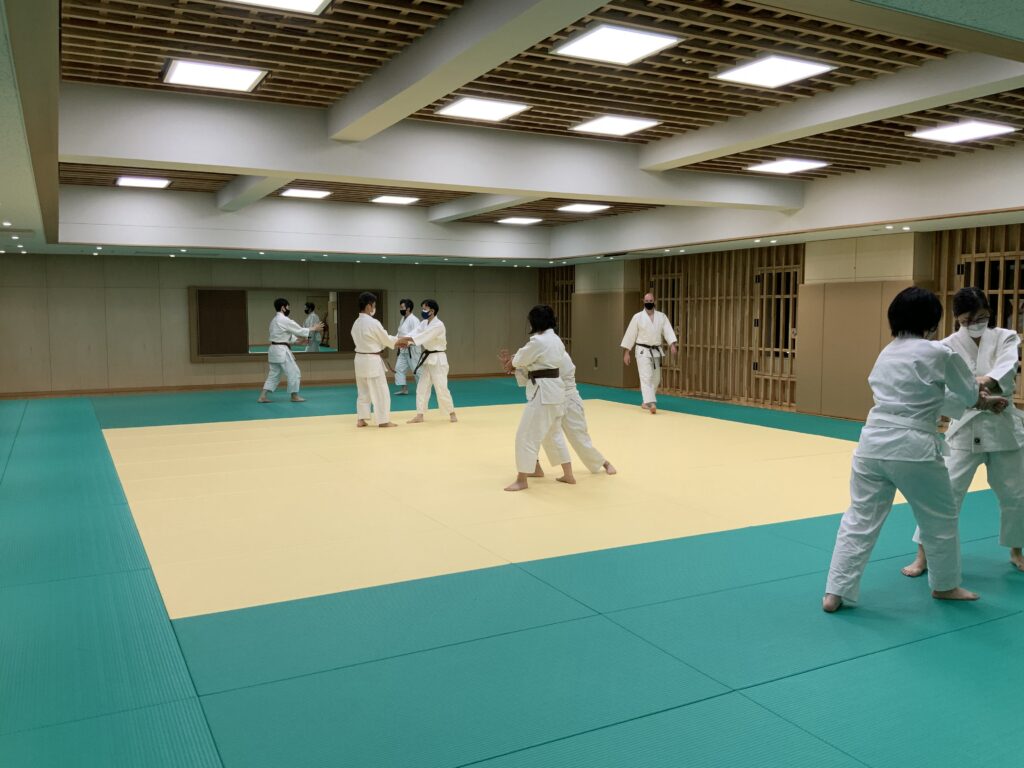
Exploring the Mind and Body through Aikido
Mugenjuku is a non-profit organization dedicated to deepening the understanding of the mind and body through Aikido, and pursuing the path of harmony with others.
What is Aikido?
A traditional Japanese martial art that utilizes the mechanisms of the mind and body to control oneself and others.
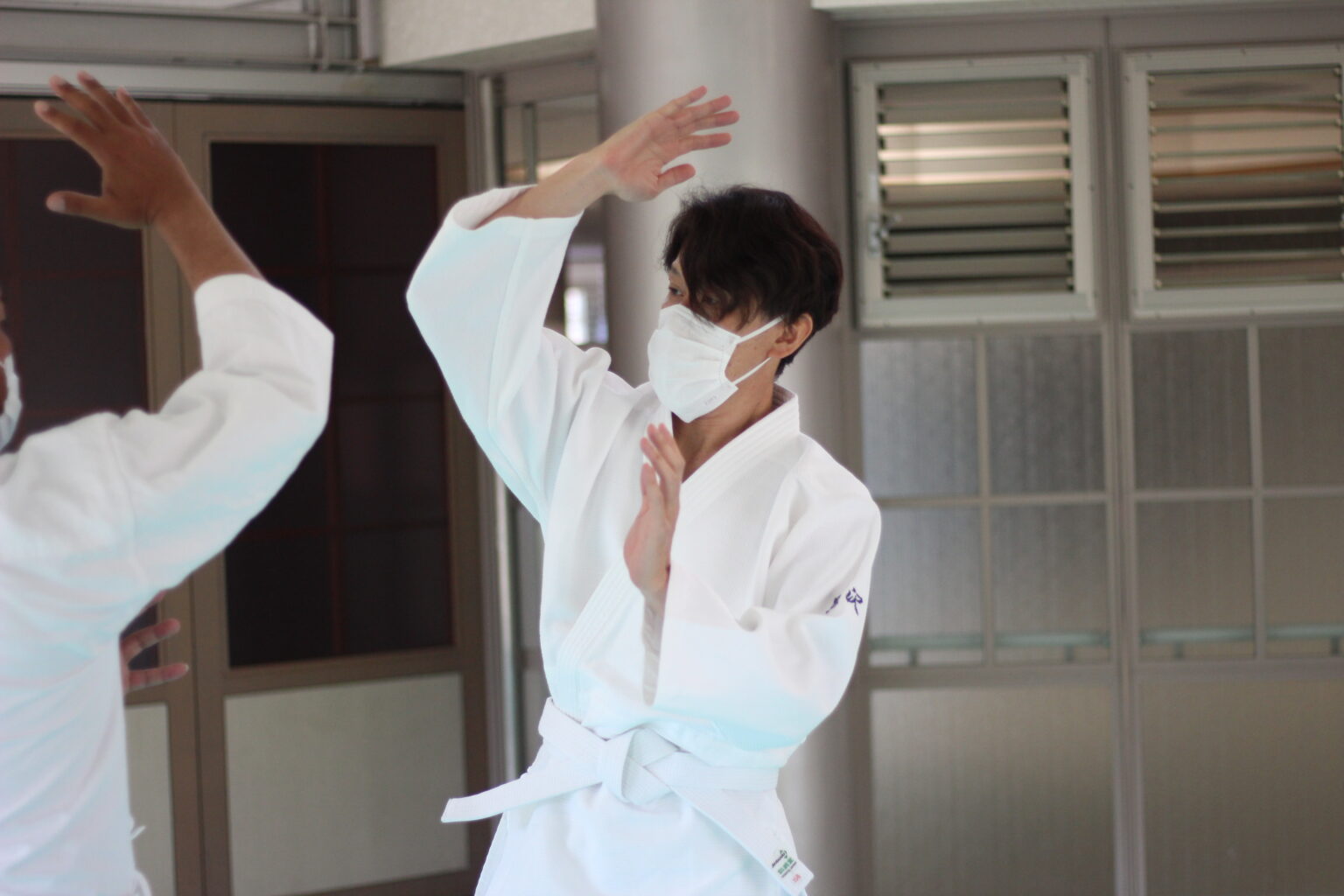
Aikido does not aim to defeat or injure an opponent. Instead, its purpose is to harmonize your energy (ki) with your opponent’s and guide them.
The ultimate principle of Aikido techniques is to blend your own strength with the pushing or pulling force of your opponent.
Exploring the Mind and Body
In Aikido, we minimize the use of superficial muscles and instead utilize “center power”—strength generated from the body’s core.
At the same time, we cultivate a calm and peaceful mind, always maintaining emotional balance.
Practical Self-Defense
We train following the framework of Yoshinkan Aikido, which has been practiced by the Tokyo Metropolitan Police Department for many years.
It is highly effective as a form of self-defense to protect yourself and your loved ones without causing unnecessary harm to others.
Improving with Age
Aikido is well-known as a lifelong martial art where practitioners continue to improve as they age.
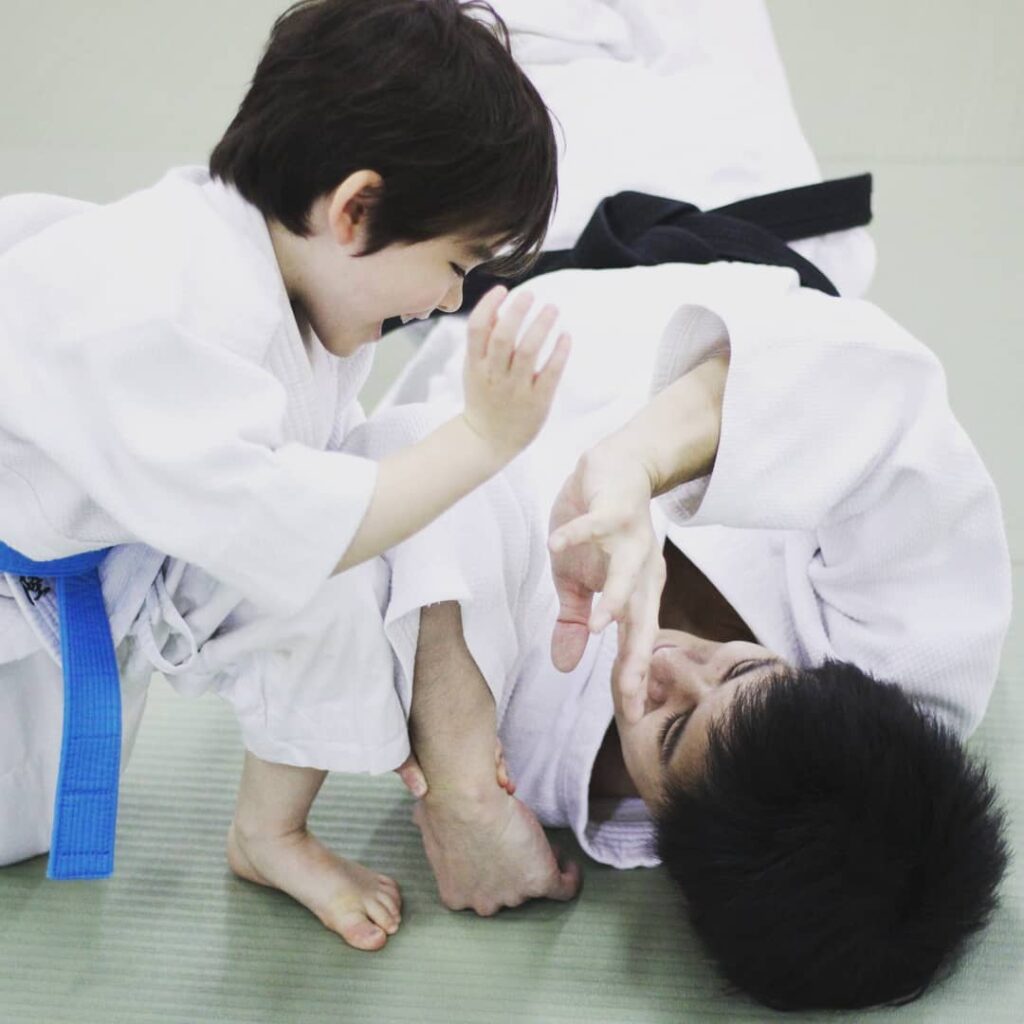
Because it can be practiced equally regardless of age, many parents and children enjoy training together.
Features of Aikido Mugenjuku
Learning Together with People from Diverse Backgrounds
The name “Mugenjuku” comes from the concept of “a place to transcend one’s limits and realize one’s infinite potential.”
At Mugenjuku, people who are dedicated to their studies, work, families, and hobbies gather with the shared goal of further improving themselves.
We value overcoming our self-imposed limits together with our teachers and fellow students. This provides an excellent opportunity to re-evaluate your existing values and habits.
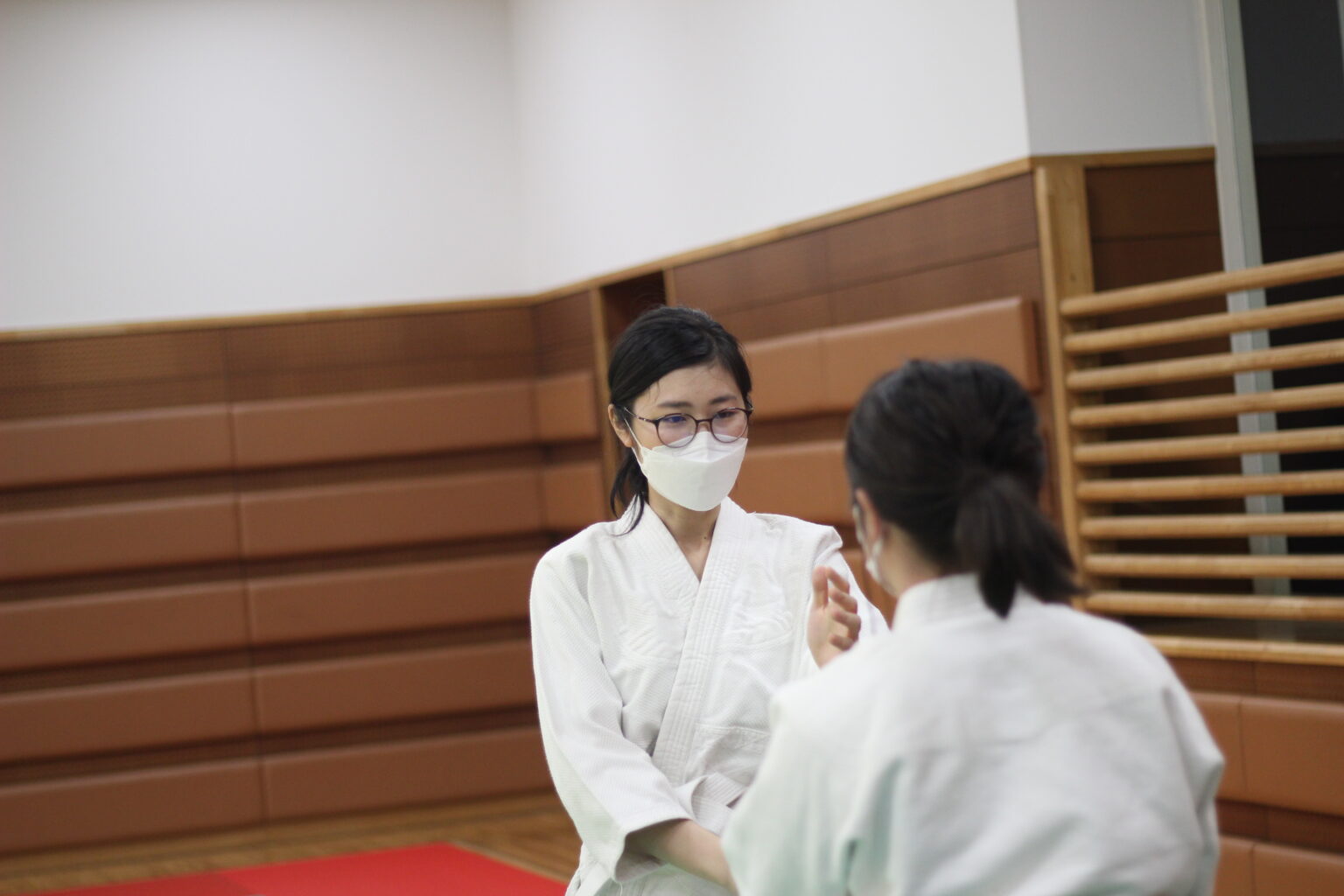
Because training is tailored to each individual’s physical abilities and age, you can progress at your own pace.
Training Schedule
Locations and Times
Meguro Dojo
Sat 12:30~, 13:30~
Classes are primarily held on Saturday afternoons.
We hold separate classes for children and adults.
Meguro City Central Gymnasium, 5-22-8 Megurohoncho, Meguro-ku, Tokyo
Shinagawa Dojo (Tokyo)
Sun 18:00~
Classes are primarily held on Sunday evenings.
This is a joint class for both children and adults.
Shinagawa City General Gymnasium, 2-11-2 Higashigotanda, Shinagawa-ku, Tokyo
Kamakura Dojo
Tue 18:00~, Sun 13:30~
Classes are held on Tuesday evenings and Sunday afternoons.
We hold separate classes for children and adults.
Kamakura City Youth Center, 912-1 Nikaido, Kamakura-shi, Kanagawa
Student Testimonials
Highly Rated
by Our Students.
I think I was able to work so hard at it precisely because my parents never forced me to do it.
Cordelia8th Grade
Rather than focusing on advancing in rank, my goal is to make Aikido a habit and a part of my daily life to maintain my physical and mental health.
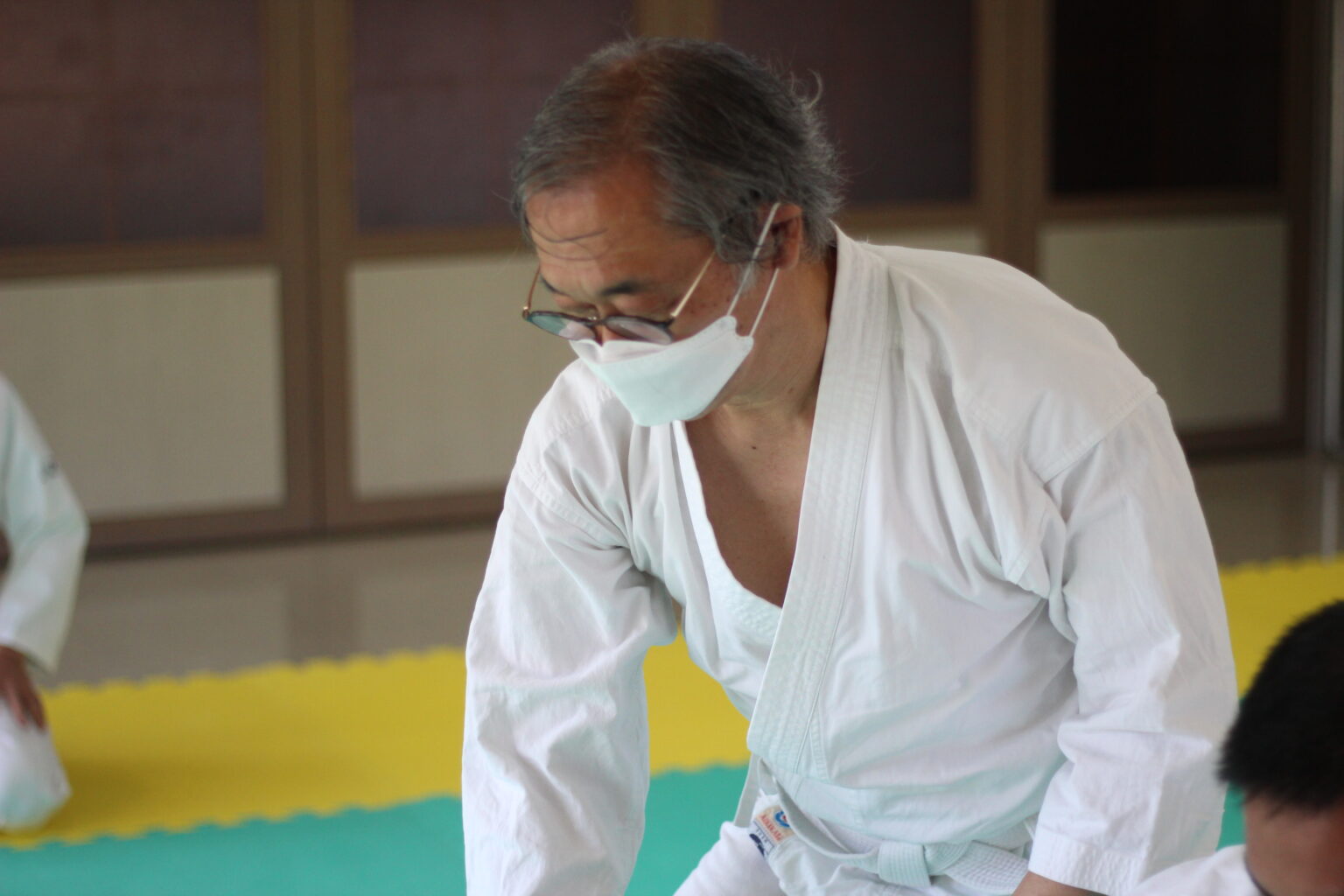
Sakae60s
Kurosawa40s
Hazuki30s
You invite a movement, the opponent moves, and you use that movement to ultimately control them with flexibility and grace. What we try to achieve in business and in Aikido is exactly the same.
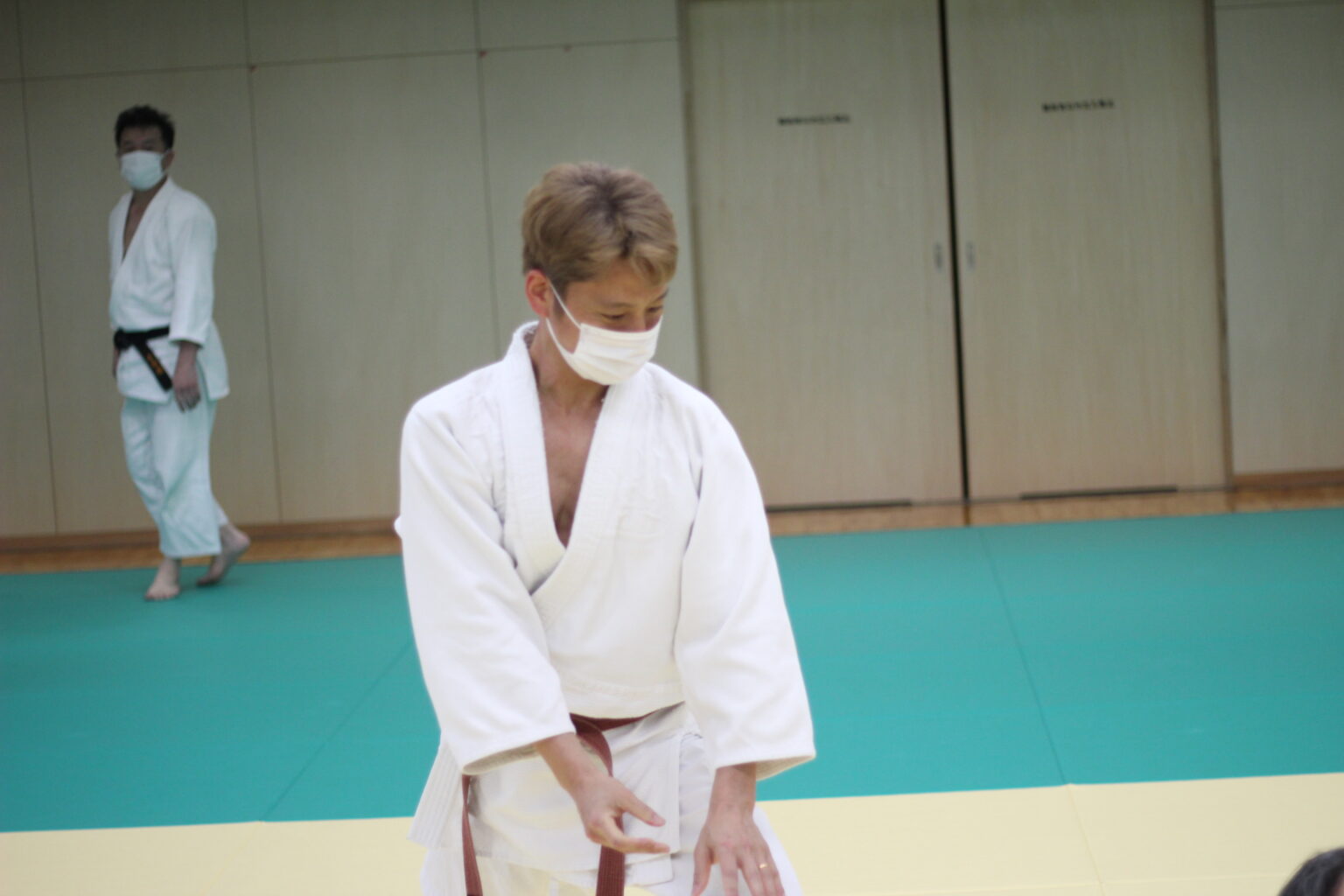
Kafuku40s
Frequently Asked Questions
Here are some of the questions we receive most often.
Anyone can start as long as they enjoy moving their body.
The training can be somewhat rigorous, but once you get used to it, even people in their 60s can easily keep up.
Furthermore, 90% of our new members are complete beginners to martial arts.
For adults, it is 1,600 to 2,500 yen per session. For children, it is 1,100 to 2,000 yen.
For more details, please check our pricing page.
Yes, parents and children can participate together. We offer a discount for parent-child participation (500 yen off for the adult).
Parents can join the children’s class, or they can participate separately in the adult and children’s classes held on the same day.
In Aikido, the goal is not to hurt others or determine a winner and loser, but rather to harmonize your energy (ki) with your opponent to guide and control them.
Also, since you always practice with a partner rather than alone, you learn how to cooperate—an essential skill for social life.